Faruk Kurt · Independent payments architect · Amsterdam
The twelve pass-or-fail criteria a payment flow I build is accepted against
I publish these criteria so that anybody buying work like this can hand them to any supplier, and know at the end whether they got a working system or a demonstration.
Version 1 · October 2026 · Download the PDF and have your supplier sign it
When the criteria are fixed, and when the final 20% of the fee is paid
On a Build, where I take one part of how a business handles money from its design to a working system and hand it over with its manual to whoever will run it, the criteria are fixed before there is anything to test, so nobody writes one after seeing the result.
Every criterion passes, or I keep working at no further fee for thirty more business days. After that you choose a new written plan or cancel, keeping every paid milestone and the whole repository, and the final 20% is not due.
Proposal, before any contract I write all twelve from the buyer’s own payment flow and name the acceptance date
Signed by both sides before implementation starts
Eight to twelve working weeks, counted from the day every start condition is met
Acceptance, on the named date all twelve run on the buyer’s side
30% on signature, due thirty days after it; 30% when the first thin path runs from your repository in your staging; 20% when the handover is complete and the rehearsal is ready.
The whole fee
The final 20% paid on acceptance, once all twelve pass
A defect that reproduces against these criteria within ninety calendar days of acceptance is mine to repair.
Who runs the criteria at acceptance, and where
The buyer’s side
The buyer’s repository
where the code is kept
the code
A clean machine
the documented tools, and nothing supplied by me
the release, built from the buyer’s code
The buyer’s staging
the copy of their systems kept for testing
- The twelve signed criteria
- The manual
- The runbook: a written procedure for each named failure
evidence from every test
Kept on the buyer’s side
build log and commit hash, transition register, decision records, rehearsal and rollback logs, the signatures of whoever ran them
A person on the buyer’s side, whoever will run the system or anyone they choose
runs the three that prove it runs without me, with me beside them: building the release, the operating tasks from the manual, and the rollback
Whoever the proposal names: their engineer, a person they name, or me with them watching
runs the other nine, in staging
Faruk Kurt, the supplier
the code I write, committed to the buyer’s repository
The release the buyer accepts is built on their side from their own code, with nothing of mine in it, and whoever they choose can build it again the same way.
The buyer keeps the evidence each test leaves, so anybody who was not in the room can check the result later.
The client project I finished most recently, and the one that best shows my work, was on one payment flow, and it ended in the system handed over with a manual for whoever runs it.
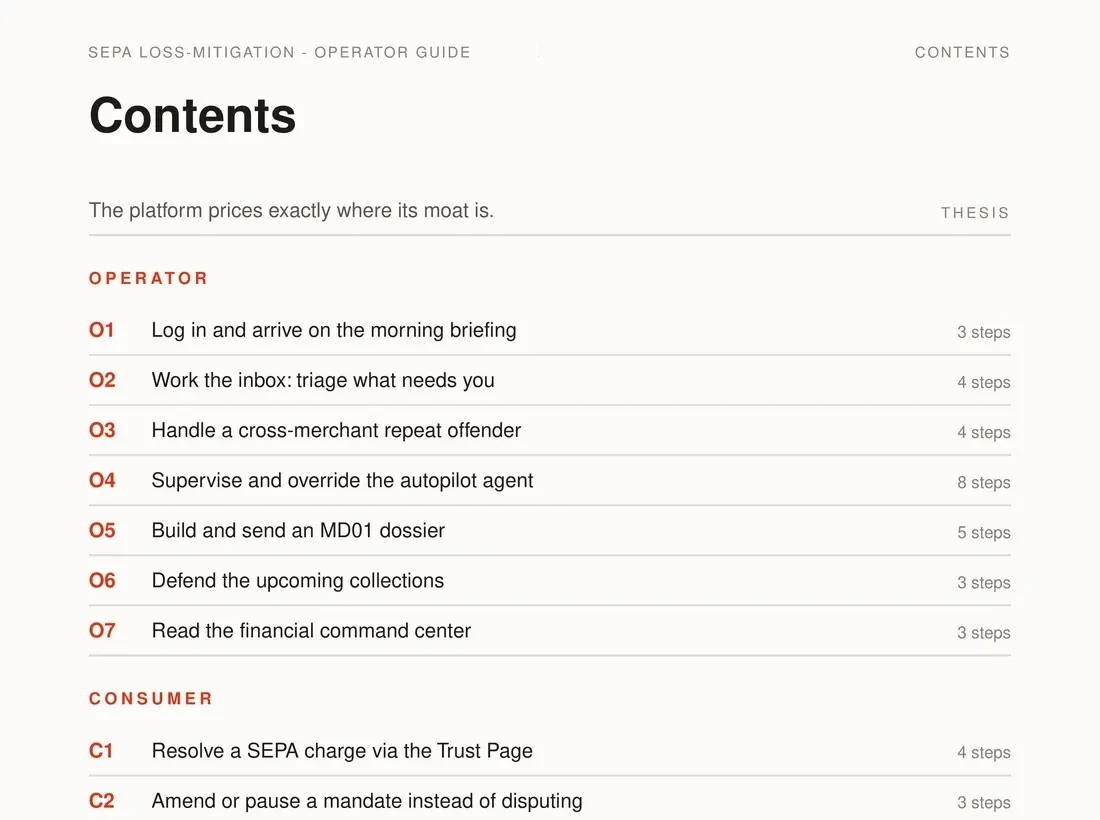
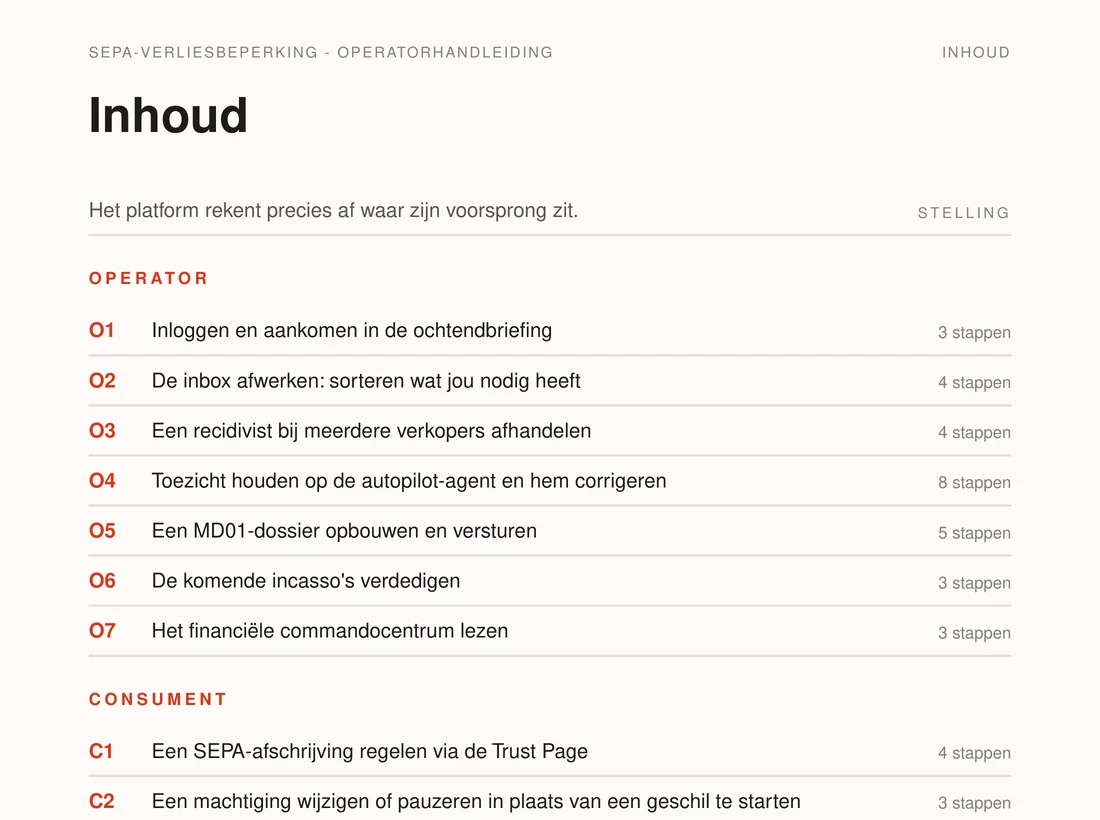
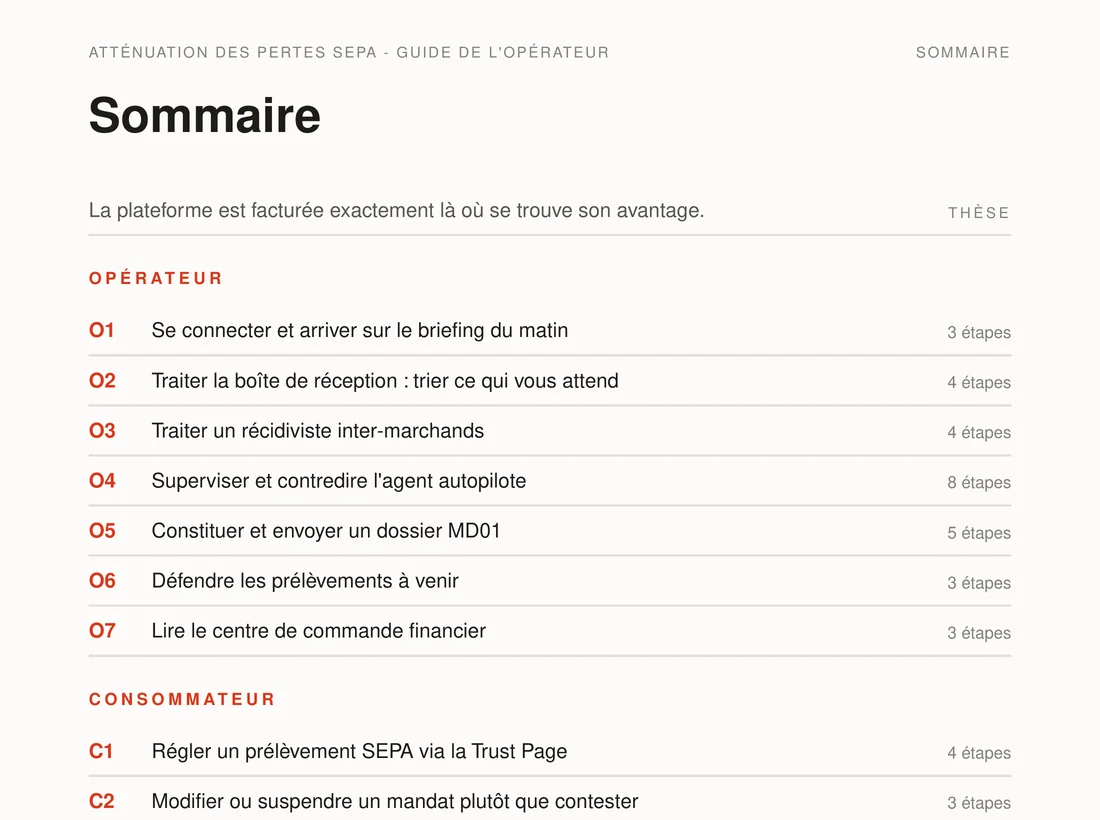
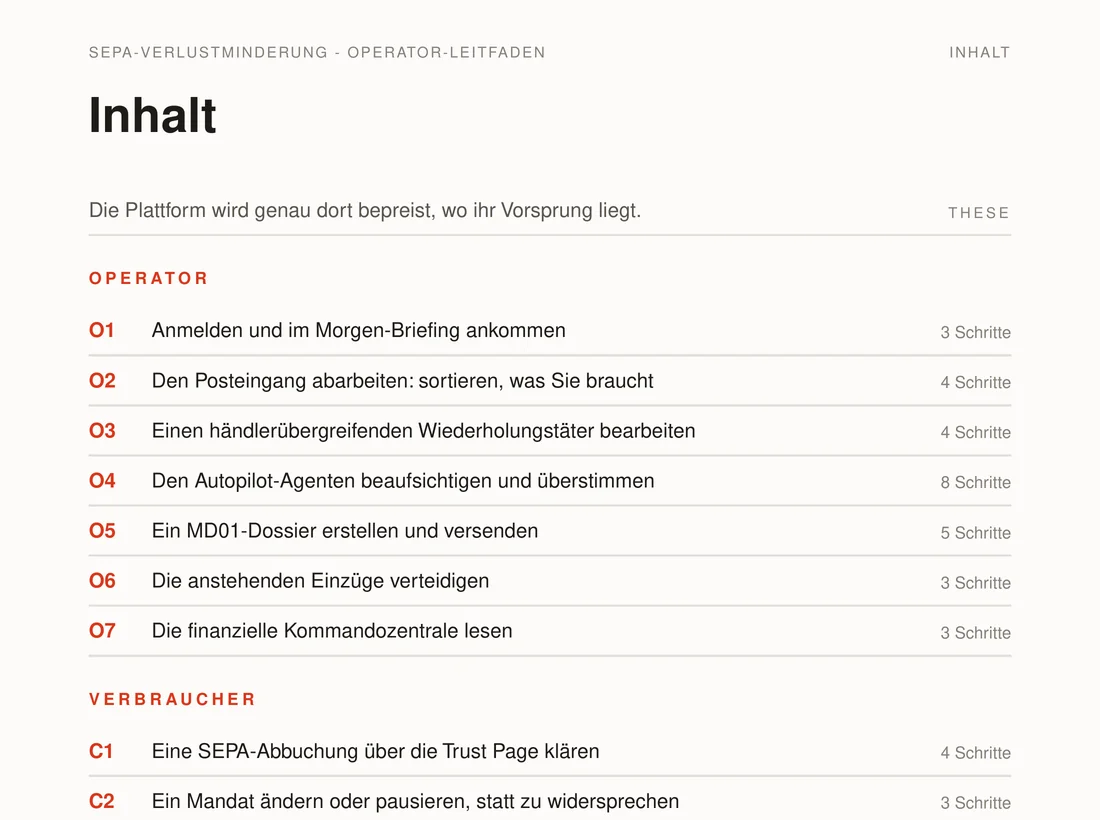
That project, screen by screen, from the first message to the handover
How each criterion is worded
Each one is a single claim about one behaviour of the system, worded so it can fail:
The system handles retries correctly
cannot fail, because nobody has said what correctly means.
Deliver the same payout event twice, €1,250.00 to one seller; observe one effect; retain both delivery records and the effect count
fails if a second effect appears.
Each criterion tests what the running system does, not how its code was written, so the twelve hold any supplier’s code to the same standard.
Their terms are general, so that anybody can use them before hiring anybody:
- A transaction
- A state the money can be in, and the transitions that move it between states
- A boundary where money or data passes to another system
- A named failure
- An operating task
On a Build, the signed twelve name the buyer’s own.
The twelve criteria
| Criterion | State What is true before the test starts. | Input What goes into the system. | Action What a named person on the buyer’s side does. | Result What that person sees for themselves. | Evidence What the buyer keeps afterwards. |
|---|---|---|---|---|---|
| 01 Reproducible build The release builds from the buyer’s own code, with nothing from the supplier in it. | A clean machine with only the documented tools installed. | The buyer’s repository at the release commit. | The person the proposal names on the buyer’s side clones the repository and runs the documented build command. | The build completes and produces the named release. | The build log, the release commit hash and the name of the person who ran it. |
| 02 Independent run The release starts in staging and reports itself ready, without the supplier. | The buyer’s staging, set up from the documented configuration. | The release built in the first criterion. | The person the proposal names on the buyer’s side starts the system and runs its documented health check. | The system starts and the health check reports ready. | The deployment log and the timestamped health-check output. |
| 03 State and transition coverage Every transition in the signed payment flow is tested, or recorded as unreachable with the condition that makes it so. | The payment flow’s signed state model and an empty transition register. | The list of every state and transition. | The person the proposal names on the buyer’s side tests every transition and records each unreachable one with the condition that makes it so. | Every transition is marked tested or unreachable, and none is left unmarked. | The completed transition register, with a test reference or the reason it is unreachable on every row. |
| 04 Decision record on completion A completed transaction records what was decided, on what evidence, under which rule and when. | A transaction that meets the signed conditions for completion. | That transaction. | The person the proposal names on the buyer’s side runs the transaction to completion and opens its decision record. | The record shows the decision, the evidence used, the rule identifier and the decision time. | The decision row, with transaction reference, rule identifier and timestamp. |
| 05 Decision record on refusal A refused transaction records the refusal, its reason and the next action a person can take. | A transaction that meets one signed refusal condition. | That transaction. | The person the proposal names on the buyer’s side runs the transaction and opens its decision record. | The system refuses the transaction, and the record shows the reason, the rule used and the named next action for a person. | The refusal row, with transaction reference, rule identifier, timestamp and next action. |
| 06 Boundary failure behaviour Each named failure at an external boundary produces the one behaviour signed for it. | One named external boundary, its counterparty stubbed and its four failure behaviours written into the signed sheet. | A timeout, a malformed response, a duplicate response and an unavailable response, presented one at a time. | The person the proposal names on the buyer’s side drives each input through the boundary. | Each input produces its signed state transition, retry, refusal or operator route, with no unrecorded effect. | Four logged outcomes, each linked to its input, resulting state and rule identifier. |
| 07 Idempotence The same inbound event delivered more than once moves the money once. | A payment flow that has not yet received the named event. | Two deliveries of the same inbound event, with the same event identifier. | The person the proposal names on the buyer’s side delivers both. | The system records both deliveries and produces one money effect. | Both delivery records, the deduplication decision and the resulting effect count. |
| 08 Reproducible amounts Any completed amount can be recomputed to the cent from the retained record alone. | A completed transaction with its computed amount and retained decision record. | The retained record of a €38.15 refund, without re-running the system. | The person the proposal names on the buyer’s side recomputes the amount from the recorded inputs and rules. | The recomputed amount equals the original to the cent. | The original amount, the recorded inputs, the rule version and the recomputation. |
| 09 Data boundary Only approved data crosses each named boundary, and every identifier in it can be traced to where it came from. | One named boundary, with its recipient and approved data classes recorded in the signed sheet. | A transaction that crosses that boundary. | The person the proposal names on the buyer’s side runs the transaction and captures the payload that actually crosses. | The payload contains only approved data, and the record shows where every identifier came from and what it was derived from. | The captured payload, the approved data-class list and the identifier-provenance record. |
| 10 Operability by a stranger An operator who didn’t build the system completes every named operating task from the manual alone. | The staging system ready, and a named operator who didn’t build it, holding only the manual. | The signed list of operating tasks. | The operator completes each task from the manual, with no instruction from the supplier. | Every task reaches its documented end state, and the operator can find the evidence it produces. | The completed task list, the referenced system records and the operator’s signature. |
| 11 Failure rehearsal An operator takes a named failure from detection to documented recovery with the runbook and nothing else. | The staging system running, and the runbook entry for one named failure. | That failure, injected into the payment flow. | An operator who didn’t build the system follows the runbook entry from detection to recovery. | The system reaches the documented recovery state, and the operator can say what became of every affected transaction. | The rehearsal log, the runbook entry used, the resulting state and the operator’s signature. |
| 12 Reversibility The prior software version can be restored without duplicating any effect, and every transaction already executed or still in flight ends reconciled or forward-corrected. | The new version running in staging, with transactions both executed and still in flight. | The signed rollback runbook. | Whoever will run the system follows the runbook and restores the prior version. | The prior version runs, no effect is duplicated, and every executed or in-flight transaction is reconciled or forward-corrected under the named procedure. | The rollback log, the version identifiers and the reconciliation or forward-correction record for every affected transaction. |
Faruk Kurt · Independent payments architect · Amsterdam · October 2026
How to have a payment flow of your own built and accepted against these twelve
No specification is needed, and nothing confidential belongs in it.
If a call suits you better,book a 30-minute call on my booking page, or ask for one by phone or WhatsApp on +31 6 18652394,and I phone you at the time you pick.